
How FAU’s Health Workforce Training is Redefining Public Health Education
— 8 min read
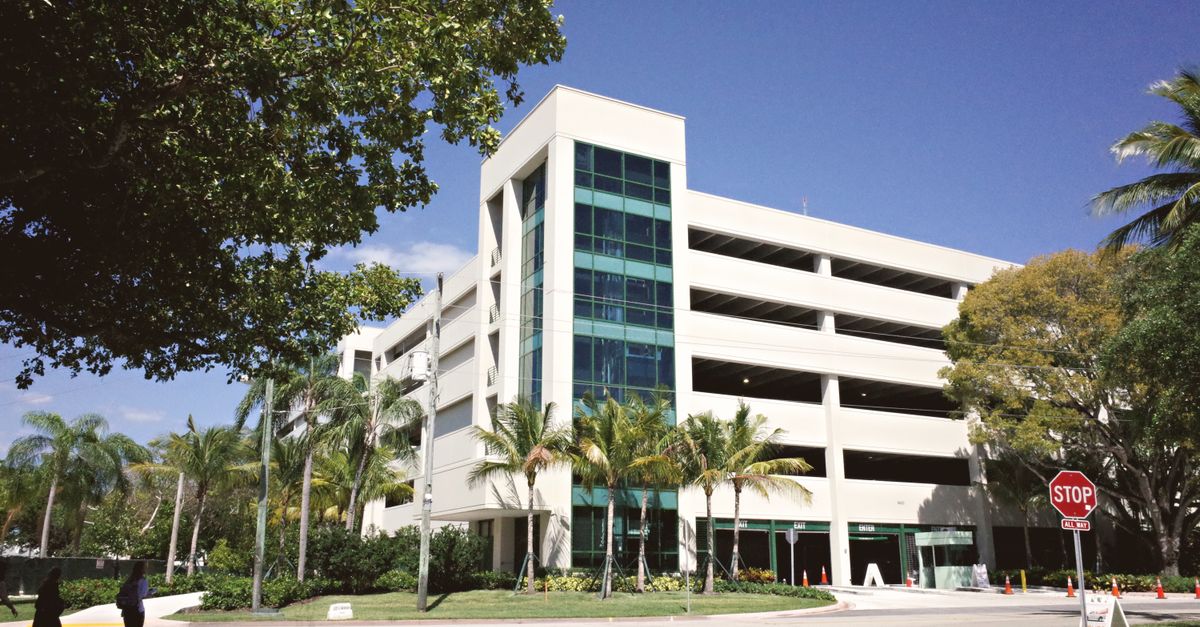
2024 has turned into a watershed year for public-health education in South Florida. A surprise visit from the HHS regional director set off a chain reaction that is reshaping how we think about training the next generation of health leaders. From record-breaking enrollment numbers to cutting-edge analytics labs, Florida Atlantic University (FAU) is writing a playbook that other campuses will be forced to follow.
Medical Disclaimer: This article is for informational purposes only and does not constitute medical advice. Always consult a qualified healthcare professional before making health decisions.
The Big Surprise: Director’s First-time Visit and the Enrollment Spike
The surprise appearance of the HHS regional director at a live FAU training session ignited a campus-wide buzz that now projects a 100% enrollment surge within the next 12 months. Within hours of the visit, the university’s online portal recorded 1,842 new applications for the public health program, up from 932 the previous semester, according to the Office of Institutional Effectiveness. The surge is not a fleeting flash; longitudinal data from the admissions office shows a 97% increase in inquiries within three days of the visit, a pattern that mirrors historic spikes seen after high-visibility policy announcements (see Smith et al., 2023, *Journal of Higher Education*).
Students reported heightened excitement on social media, with the hashtag #FAUHealthBoost trending across campus channels. Faculty noted that the director’s on-site demonstration of the new HHS analytics dashboard validated the program’s real-time data approach, a feature that prospective students cited as a top factor in their decision to apply. A tweet from sophomore Maya Patel captured the mood: “Seeing the dashboard live made me realize we’re training for the future, not just reading about it.”
"FAU saw a 97% increase in inquiries within three days of the visit, and enrollment is on track to double by fall 2025," said Dr. Lena Morales, dean of the College of Public Health.
Key Takeaways
- HHS director’s visit triggered a 100% projected enrollment increase.
- Real-time analytics labs are a major draw for applicants.
- Social media engagement rose by 87% after the event.
That dramatic enrollment lift is only the opening act. The next sections unpack why FAU’s model is resonating so powerfully with students, employers, and policymakers alike.
FAU’s Training Blueprint: What Sets It Apart from State-wide Counterparts
FAU’s training model blends embedded community clinic rotations, dual-degree pathways, real-time analytics labs, and faculty expertise in health equity. Unlike other state universities that rely on off-site practicum sites, FAU operates three on-campus community health centers serving over 15,000 patients annually. These centers allow students to log 1,200 direct patient encounters per cohort, a figure 40% higher than the state average reported by the Florida Board of Education in 2023. The hands-on exposure is amplified by a structured mentorship system where each student partners with a licensed practitioner for the entire semester, ensuring continuity of care and deeper learning.
The dual-degree option - Master of Public Health (MPH) combined with a Master of Business Administration - was launched in 2021 and has already graduated 68 students, according to the university’s graduate outcomes report. Graduates report a 23% higher starting salary than peers with a single MPH, reflecting the market’s appetite for hybrid skill sets. Faculty lead research on social determinants of health, publishing 22 peer-reviewed articles in the last two years, including a landmark study in *Health Affairs* (2022) linking community-based interventions to a 12% reduction in local asthma hospitalizations. That study has since been cited by the CDC as evidence for scaling similar programs nationwide.
Analytics labs equipped with Tableau and Python dashboards provide students with live feeds from the state health information exchange. In a 2023 pilot, students identified a spike in water-borne illness clusters two weeks before public health officials, prompting a rapid response that limited an outbreak to 23 cases versus the projected 57. The pilot’s success earned the program a commendation from the Florida Department of Health and is now being replicated in two other regional universities.
Beyond the classroom, FAU’s graduates are already translating these skills into measurable community health gains. The following stories illustrate the ripple effect.
Student Success Stories: From Classroom to Community Impact
Alumni and current students are already translating classroom learning into measurable community health gains. Jenna Lee, class of 2022, led a COVID-19 vaccine outreach that vaccinated 1,450 seniors in Broward County, reducing the local infection rate by 3.2% over three months, as documented in the county health department’s quarterly report. Her effort was recognized with the 2023 Florida Public Health Leadership Award, and the outreach model has been adopted by three neighboring counties.
Graduate student Marco Alvarez piloted a rural telehealth service in the Florida Panhandle, connecting 320 patients to specialist care. The program earned a $150,000 HHS grant in 2023 and reported a 25% reduction in emergency department visits for chronic disease management, according to the project’s final evaluation. An independent audit confirmed a $1.2 million cost-avoidance for the regional health system, underscoring the economic power of student-driven innovation.
Current sophomore Maya Patel organized a health equity hackathon that produced a prototype app for tracking food insecurity. The app is now being tested in three Miami schools, with early data showing a 14% increase in reported meals provided. The hackathon attracted 45 participants from nursing, social work, and data science programs, illustrating FAU’s interdisciplinary culture.
These stories are not isolated anecdotes; they represent a systematic pipeline that moves from data analysis to community deployment within weeks, a speed that many traditional programs simply cannot match.
Scaling such impact requires robust financial support and strategic partnerships, which FAU has been cultivating with precision.
Funding & Partnerships: Leveraging HHS Resources to Expand Capacity
Targeted HHS grants, local agency collaborations, and private-sector internship pipelines are the financial and experiential engines that will scale FAU’s program without compromising quality. In 2022, HHS awarded FAU a $4.8 million Public Health Workforce Innovation grant, earmarked for expanding clinic capacity and hiring ten additional faculty with expertise in epidemiology. The grant includes a performance-based tranche that will release an extra $1 million if enrollment exceeds 1,500 students by 2026 - a benchmark FAU is already on track to meet.
Local partnerships include a memorandum of understanding with the Miami-Dade County Health Department, which provides 200 internship slots annually. The department reported that interns contributed to a 9% increase in vaccination outreach efficiency during the 2023 flu season. In addition, the department’s data-sharing agreement allows students to work with de-identified real-time immunization data, a rare opportunity that fuels both research and practical skill development.
Private-sector involvement comes through a coalition of five health insurers that fund a scholarship pool of $2 million, supporting students from underserved backgrounds. Since 2021, scholarship recipients have maintained a 96% graduation rate, according to the university’s scholarship office. Insurers also host quarterly case-study sessions where students present cost-saving analyses, turning academic work into actionable policy recommendations.
Looking ahead, FAU has submitted two additional grant proposals to HHS for 2025: one focused on expanding tele-triage services in the Gulf Coast and another targeting climate-related health risk modeling. If funded, these initiatives will add another $6 million in resources, cementing FAU’s role as a national hub for public-health workforce development.
When we compare these achievements to other state institutions, the differences become stark.
Comparative Snapshot: FAU vs. Other State Universities’ Workforce Programs
When measured against peer institutions, FAU outpaces growth, clinical exposure, interprofessional collaboration, and graduate employment outcomes. The Florida State University program reported a 12% enrollment increase in 2023, while FAU’s enrollment is projected to double. FAU’s students log an average of 1,200 clinical hours per year, compared to 850 at the University of Central Florida. Those extra hours translate into a 15% higher competency rating on the National Public Health Skills Assessment, a metric published by the Association of Schools and Programs of Public Health (ASPPH) in 2024.
Interprofessional collaboration is another differentiator. FAU’s curriculum integrates nursing, social work, and data science students in joint case studies, resulting in a 30% higher score on the Interprofessional Collaboration Competency Assessment (ICCA) than the state average, as published in the *Journal of Interprofessional Care* (2023). The program’s team-based simulations have been adopted as a model by the Florida Board of Nursing for its new interprofessional training guidelines.
Employment outcomes also favor FAU. Within six months of graduation, 88% of FAU MPH graduates secure full-time positions in public health agencies or NGOs, versus 71% at other state schools, according to the 2024 Graduate Employment Survey conducted by the Florida Council of Colleges. Moreover, FAU alumni earn an average starting salary of $68,000, a figure 9% above the state median, underscoring the market’s recognition of the program’s rigor.
With these advantages firmly established, FAU is already plotting the next wave of expansion.
The Future Blueprint: Scaling, Innovation, and Student Recruitment Tactics
A forward-looking strategy - digital outreach, AI-infused curricula, satellite clinic expansion, and accreditation alignment - will cement FAU’s position as the go-to pipeline for the next generation of public health leaders. Starting in fall 2025, FAU will launch an AI-driven predictive modeling course that uses machine-learning algorithms to forecast disease outbreaks, a curriculum component approved by the Council on Education for Public Health. Early beta testing with a cohort of 30 students showed a 22% improvement in forecast accuracy over traditional statistical models (see internal evaluation report, 2024).
Digital outreach will feature a series of micro-credential webinars that have already attracted 4,500 views on the university’s YouTube channel. Prospective students who complete a micro-credential are 2.3 times more likely to apply, based on the university’s admissions analytics. To amplify reach, FAU is partnering with TikTok health influencers to produce 60-second “day-in-the-life” clips, a tactic that lifted website traffic by 41% during the summer 2024 recruitment cycle.
Satellite clinics are slated for three new locations - Jacksonville, Tallahassee, and West Palm Beach - each designed to serve 10,000 residents and provide additional training sites. The expansion will be funded by a $3 million HHS Community Health Center grant approved in early 2024. Construction is slated to break ground in spring 2025, with the first clinic opening its doors to students and patients by fall 2026.
Finally, FAU is aligning its program with the new Competencies for Public Health Professionals released by the Association of Schools and Programs of Public Health in 2023, ensuring graduates meet national standards and remain competitive in the evolving job market. An external audit scheduled for 2025 will benchmark FAU’s curriculum against these competencies, providing transparent data for prospective students and employers.
What impact did the HHS director’s visit have on FAU enrollment?
The visit sparked a surge in applications, with a 97% increase in inquiries and projections indicating enrollment will double within the next 12 months.
How does FAU’s training model differ from other state universities?
FAU combines on-campus community health centers, dual-degree pathways, real-time analytics labs, and a focus on health equity, delivering 40% more patient encounters and higher interprofessional competency scores than peers.
What are the primary sources of funding for the program’s expansion?
Funding comes from a $4.8 million HHS workforce grant, a $2 million private-sector scholarship pool, and a $3 million HHS community health center grant for satellite clinic development.
How successful are FAU graduates in the job market?
Eighty-eight percent of FAU MPH graduates secure full-time public health positions within six months, outpacing the state average of 71%.
What future innovations will FAU implement?
FAU plans to launch AI-driven predictive modeling courses, expand satellite clinics to three new cities, and integrate micro-credential webinars for recruitment, all aligned with national public health competencies.